Showing posts with label Budgeting. Show all posts

Sunday, January 5, 2025

Unlock Your Financial Potential: A Personal Finance Guide for Indians

In today’s fast-paced world, managing money effectively has become more crucial than ever. Personal finance isn’t just about saving money; it’s about making informed decisions to secure your future while enjoying the present. For Indians, with our unique financial landscape and cultural nuances, mastering personal finance can unlock the door to a life of stability and growth.

What is Personal Finance?

Personal finance encompasses everything related to managing your money—from earning and spending to saving and investing. In India, where family dynamics and cultural traditions often influence financial decisions, personal finance also includes planning for joint family expenses, education, and weddings. It’s about balancing your present needs with future goals, ensuring that every rupee is well-utilized.

Key Components of Personal Finance

1. Budgeting: The Foundation of Financial Health

Budgeting helps you track your income and expenses, ensuring you don’t overspend. A popular method is the 50/30/20 rule:

  • 50% for essentials (rent, groceries, utilities).
  • 30% for discretionary spending (entertainment, dining out).
  • 20% for savings and investments.

Pro Tip: Use apps like Walnut or ET Money to monitor your expenses automatically.

2. Saving: Building Your Safety Net

Savings act as a cushion during emergencies. Aim to build an emergency fund equivalent to 3-6 months of your monthly expenses. Utilize high-yield savings accounts or fixed deposits to grow your savings.

Pro Tip: Automate savings through recurring deposits or systematic investment plans (SIPs).

3. Investing: Growing Your Wealth

Investing is crucial for long-term financial growth. Explore these popular options in India:

  • Mutual Funds: Start with SIPs for disciplined investing.
  • Stocks: Invest in equity for higher returns but higher risks.
  • Real Estate: A preferred option for many Indians, especially for long-term gains.
  • Gold: A traditional favorite, now accessible via digital platforms.

Pro Tip: Use platforms like Zerodha or Groww for seamless investing.

4. Insurance: Securing Your Future

Insurance is your safety net against unforeseen events. Essential types include:

  • Health Insurance: Covers medical emergencies.
  • Life Insurance: Provides financial support to your family in case of your absence.
  • Term Insurance: Offers high coverage at a low cost.

Pro Tip: Compare policies on platforms like Policybazaar to find the best deals.

5. Debt Management: Staying in Control

Avoid high-interest debts like credit cards. If you have loans, prioritize paying off high-interest ones first. Consider consolidating debts to simplify repayment.

Pro Tip: Always pay your credit card bills in full to avoid hefty interest charges.

Unique Financial Opportunities in India

1. Government Schemes

  • PPF (Public Provident Fund): A long-term, tax-saving investment with attractive interest rates.
  • NPS (National Pension System): Helps you build a retirement corpus.
  • Sukanya Samriddhi Yojana: A savings scheme for the girl child.

2. Tax-Saving Instruments

Under Section 80C, you can save taxes through investments like ELSS funds, PPF, and insurance premiums.

3. Emerging Investment Trends

Consider these new-age investment options:

  • Digital Gold: Invest in gold without physical storage hassles.
  • Startups: Platforms like AngelList allow you to invest in emerging businesses.

Personalized Tips for Different Demographics

1. Students and Freshers

Start building a savings habit, even if it’s a small amount. Learn about investing basics and explore SIPs.

2. Mid-Career Professionals

Focus on balancing expenses with wealth creation. Diversify your investments to include mutual funds, stocks, and real estate.

3. Retirees

Shift focus to wealth preservation. Invest in low-risk options like fixed deposits or government bonds. Ensure adequate health insurance coverage.

Practical Tools and Resources

Mobile Apps

  • Walnut: Tracks expenses.
  • ET Money: Manages investments and expenses.

Investment Platforms

  • Zerodha: For stock trading and mutual funds.
  • Groww: Simplifies mutual fund and stock investments.

Books and Blogs

  • Rich Dad Poor Dad by Robert Kiyosaki.
  • Blogs like Subramoney and JagoInvestor.
Start Investing with Zerodha

Your financial journey starts with a single step. Assess your current financial situation today. Set realistic goals and create a plan to achieve them. Begin with small, consistent efforts, whether it’s tracking your expenses or starting a SIP. Remember, the earlier you start, the greater your financial potential.

Financial freedom is not a destination but a journey. With the right tools, knowledge, and discipline, you can take charge of your finances and secure a brighter future for yourself and your loved ones. Start today, and unlock your financial potential!

Friday, September 20, 2024

How to Build an Emergency Fund: Steps to Financial Security and Peace of Mind

Introduction: Why You Need an Emergency Fund


An emergency fund is one of the most important pillars of personal finance. It’s a safety net designed to cover unforeseen expenses such as medical bills, car repairs, or unexpected job loss. Without this financial cushion, you might end up relying on high-interest credit cards or loans, leading to a cycle of debt.

In this blog, we'll discuss why an emergency fund is crucial for everyone, who should prioritize it, and how to start building it today. We'll also provide some practical examples and images to illustrate these points.


Why Is an Emergency Fund Crucial?

  1. Financial Security Life is full of unexpected events, and an emergency fund ensures you can handle these without disrupting your financial stability. Whether it's a sudden illness or home repair, having a buffer prevents you from derailing your long-term financial goals.

  2. Debt Prevention An emergency fund prevents the need for borrowing in case of urgent expenses. Without one, you might have to take on credit card debt or personal loans with high interest rates. Over time, these debts can accumulate and make it difficult to achieve financial independence.

  3. Peace of Mind Knowing you have funds to cover emergencies reduces stress and anxiety. This peace of mind lets you focus on other aspects of life, such as growing wealth or planning for future financial goals.


Who Should Build an Emergency Fund?

Everyone—regardless of their income, job stability, or lifestyle, having an emergency fund is essential.

  • College Students: Even students should have some funds set aside for emergencies like car repairs, medical expenses, or unexpected tuition hikes.
  • Young Professionals: Individuals just starting their careers should aim to build an emergency fund, especially if they live independently or have variable incomes.
  • Families: For households, especially those with children, an emergency fund is critical for covering unforeseen family expenses.
  • Retirees: Even retired need an emergency fund to manage unexpected healthcare or home maintenance costs.

How Much Should You Save?

A general rule of thumb is to save 3 to 6 months of living expenses. This means that if your monthly expenses are ₹40,000, you should aim to have between ₹1,20,000 and ₹2,40,000 in your emergency fund.

  1. Step 1: Calculate your essential monthly expenses:

    • Rent or mortgage
    • Utilities (electricity, water, gas)
    • Groceries
    • Loan or credit card payments
    • Transportation
    • Insurance (health, car, etc.)
  2. Step 2: Multiply the total by 3 to 6 months to determine your emergency fund target.

Example: If your essential monthly expenses are ₹30,000, your emergency fund goal should be between ₹90,000 and ₹1,80,000.


How to Build an Emergency Fund: Step-by-Step

  1. Set a Realistic Goal
    Start with a smaller, more manageable target, such as ₹10,000, and gradually build from there. This helps you stay motivated and avoid feeling overwhelmed.

  2. Automate Your Savings
    One of the easiest ways to build an emergency fund is to automate savings. Set up a recurring transfer from your salary account to a dedicated savings account. Even ₹2,000 a month adds up over time.

  3. Cut Unnecessary Expenses
    Identify non-essential expenses, such as dining out or subscriptions, and temporarily reduce them. Allocate this saved money towards your emergency fund.

  4. Earn Extra Income
    Consider side jobs, freelance work, or selling unused items to boost your emergency savings.


Example of Building an Emergency Fund

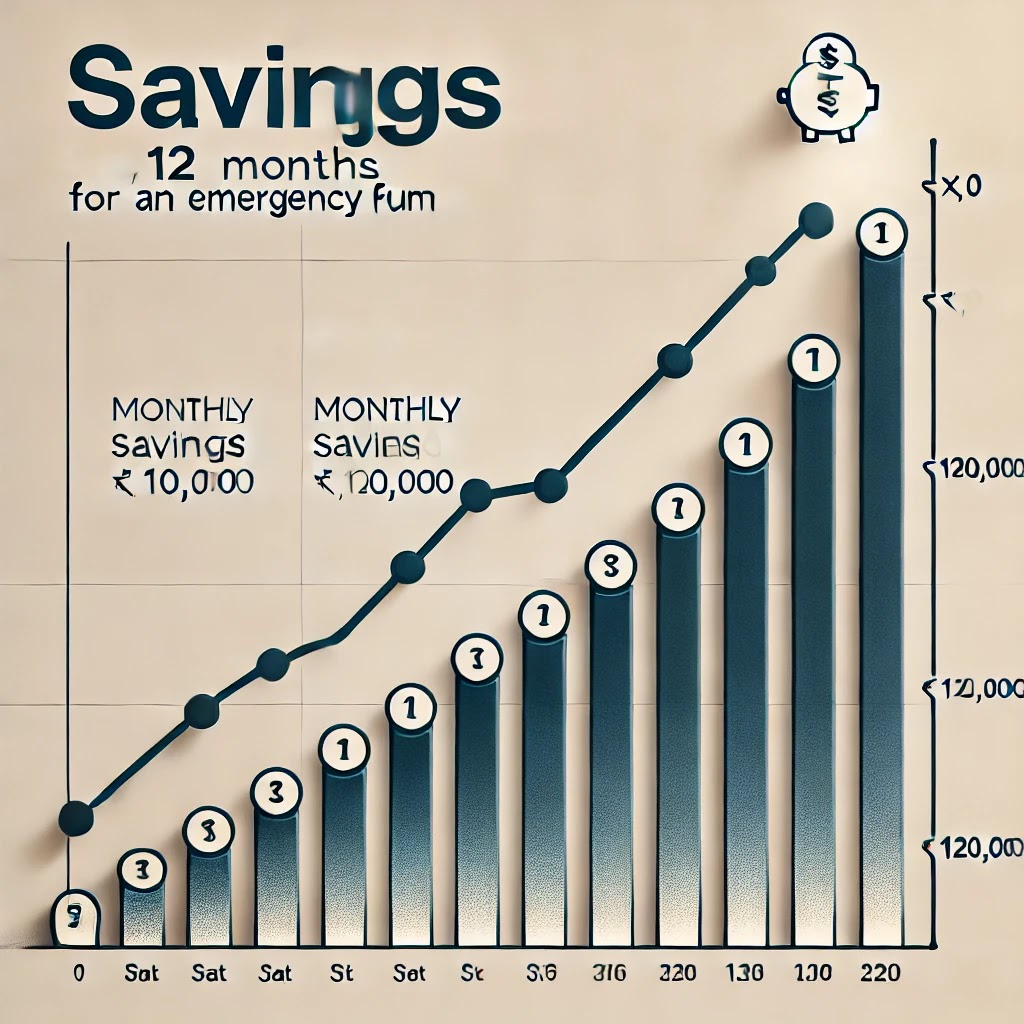
Let’s say you’ve decided to save ₹1,20,000 over the next 12 months. To achieve this, you would need to save ₹10,000 per month. You can break this down further by cutting discretionary expenses or increasing your income to meet the monthly target.

Image Example: A graph showing savings progression from ₹0 to ₹1,20,000 over 12 months.


Where to Keep Your Emergency Fund

Your emergency fund should be kept in a liquid, accessible account. Here are a few options:

  • High-Interest Savings Account: Provides easy access to funds while earning interest.
  • Money Market Account: Another safe and liquid option with a slightly higher interest rate than a regular savings account.
  • Liquid Mutual Funds: For slightly better returns than savings accounts, you can park your emergency fund in liquid mutual funds. Just ensure they are easily redeemable without penalties.

Conclusion

Building an emergency fund is the first and most crucial step towards financial stability. Start small, automate your savings, and ensure that the funds are easily accessible. This financial safety net will protect you from falling into debt and help you maintain peace of mind during life's unpredictable events.


If you're ready to start building your emergency fund, subscribe to our blog for more practical tips on managing your personal finances. Let us guide you step-by-step to financial independence!

Learn how to set financial goals that help you plan for short, medium, and long-term success in our next post.

Setting Financial Goals: A Step-by-Step Guide.

The History and Evolution of the Stock Market

Introduction The stock market has been a fundamental pillar of the global economy, evolving over centuries to become the complex financial s...