Showing posts with label Financial Planning. Show all posts

Friday, September 20, 2024

How to Build an Emergency Fund: Steps to Financial Security and Peace of Mind

Introduction: Why You Need an Emergency Fund


An emergency fund is one of the most important pillars of personal finance. It’s a safety net designed to cover unforeseen expenses such as medical bills, car repairs, or unexpected job loss. Without this financial cushion, you might end up relying on high-interest credit cards or loans, leading to a cycle of debt.

In this blog, we'll discuss why an emergency fund is crucial for everyone, who should prioritize it, and how to start building it today. We'll also provide some practical examples and images to illustrate these points.


Why Is an Emergency Fund Crucial?

  1. Financial Security Life is full of unexpected events, and an emergency fund ensures you can handle these without disrupting your financial stability. Whether it's a sudden illness or home repair, having a buffer prevents you from derailing your long-term financial goals.

  2. Debt Prevention An emergency fund prevents the need for borrowing in case of urgent expenses. Without one, you might have to take on credit card debt or personal loans with high interest rates. Over time, these debts can accumulate and make it difficult to achieve financial independence.

  3. Peace of Mind Knowing you have funds to cover emergencies reduces stress and anxiety. This peace of mind lets you focus on other aspects of life, such as growing wealth or planning for future financial goals.


Who Should Build an Emergency Fund?

Everyone—regardless of their income, job stability, or lifestyle, having an emergency fund is essential.

  • College Students: Even students should have some funds set aside for emergencies like car repairs, medical expenses, or unexpected tuition hikes.
  • Young Professionals: Individuals just starting their careers should aim to build an emergency fund, especially if they live independently or have variable incomes.
  • Families: For households, especially those with children, an emergency fund is critical for covering unforeseen family expenses.
  • Retirees: Even retired need an emergency fund to manage unexpected healthcare or home maintenance costs.

How Much Should You Save?

A general rule of thumb is to save 3 to 6 months of living expenses. This means that if your monthly expenses are ₹40,000, you should aim to have between ₹1,20,000 and ₹2,40,000 in your emergency fund.

  1. Step 1: Calculate your essential monthly expenses:

    • Rent or mortgage
    • Utilities (electricity, water, gas)
    • Groceries
    • Loan or credit card payments
    • Transportation
    • Insurance (health, car, etc.)
  2. Step 2: Multiply the total by 3 to 6 months to determine your emergency fund target.

Example: If your essential monthly expenses are ₹30,000, your emergency fund goal should be between ₹90,000 and ₹1,80,000.


How to Build an Emergency Fund: Step-by-Step

  1. Set a Realistic Goal
    Start with a smaller, more manageable target, such as ₹10,000, and gradually build from there. This helps you stay motivated and avoid feeling overwhelmed.

  2. Automate Your Savings
    One of the easiest ways to build an emergency fund is to automate savings. Set up a recurring transfer from your salary account to a dedicated savings account. Even ₹2,000 a month adds up over time.

  3. Cut Unnecessary Expenses
    Identify non-essential expenses, such as dining out or subscriptions, and temporarily reduce them. Allocate this saved money towards your emergency fund.

  4. Earn Extra Income
    Consider side jobs, freelance work, or selling unused items to boost your emergency savings.


Example of Building an Emergency Fund

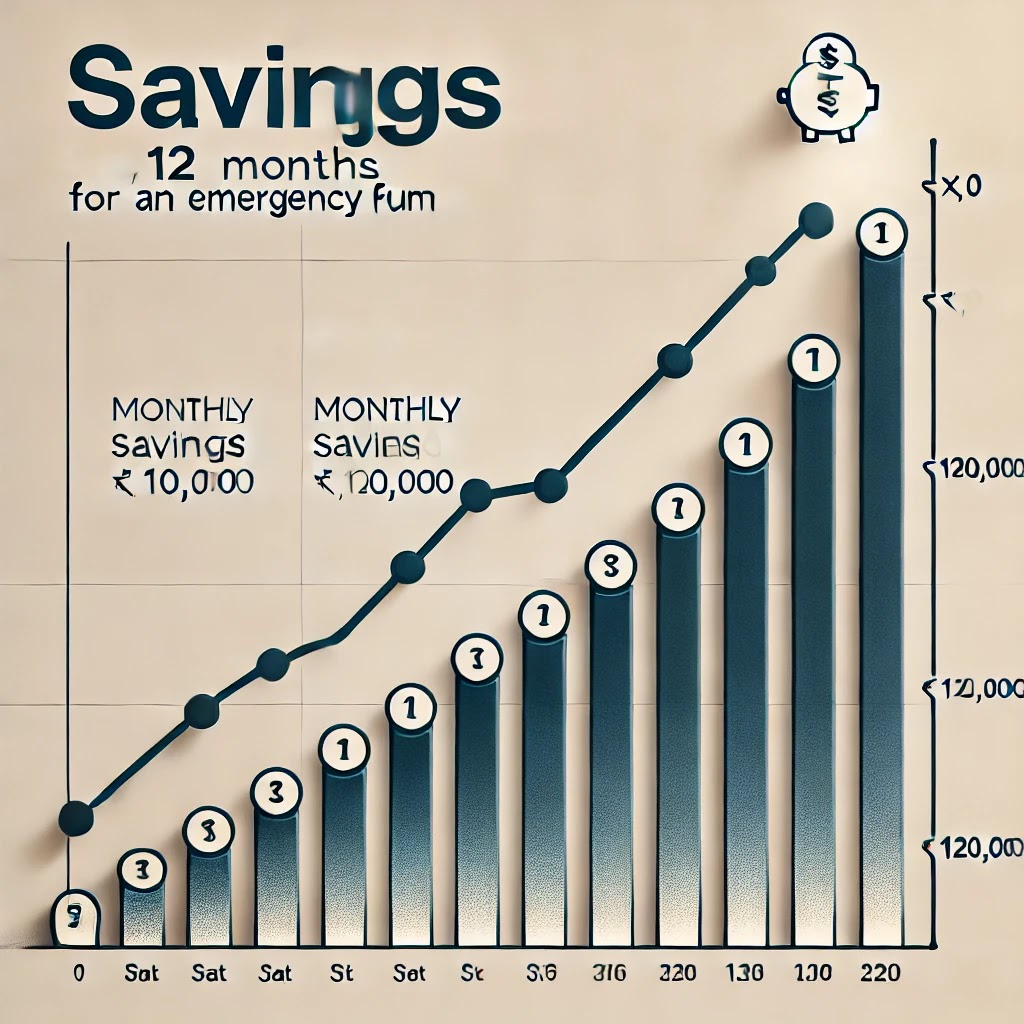
Let’s say you’ve decided to save ₹1,20,000 over the next 12 months. To achieve this, you would need to save ₹10,000 per month. You can break this down further by cutting discretionary expenses or increasing your income to meet the monthly target.

Image Example: A graph showing savings progression from ₹0 to ₹1,20,000 over 12 months.


Where to Keep Your Emergency Fund

Your emergency fund should be kept in a liquid, accessible account. Here are a few options:

  • High-Interest Savings Account: Provides easy access to funds while earning interest.
  • Money Market Account: Another safe and liquid option with a slightly higher interest rate than a regular savings account.
  • Liquid Mutual Funds: For slightly better returns than savings accounts, you can park your emergency fund in liquid mutual funds. Just ensure they are easily redeemable without penalties.

Conclusion

Building an emergency fund is the first and most crucial step towards financial stability. Start small, automate your savings, and ensure that the funds are easily accessible. This financial safety net will protect you from falling into debt and help you maintain peace of mind during life's unpredictable events.


If you're ready to start building your emergency fund, subscribe to our blog for more practical tips on managing your personal finances. Let us guide you step-by-step to financial independence!

Learn how to set financial goals that help you plan for short, medium, and long-term success in our next post.

Setting Financial Goals: A Step-by-Step Guide.

Monday, September 16, 2024

Achieving Financial Independence: Practical Strategies and Use Cases

 Introduction:

Financial independence means having enough income to cover your living expenses without needing to work actively. It's the freedom to make life choices without being constrained by financial obligations. Let’s explore how to achieve financial independence with practical strategies and real-life use cases.


1. The Path to Financial Independence

The journey to financial independence involves creating multiple income streams, controlling expenses, and investing wisely. Here are the key steps:

  • Create a Financial Plan: Assess your current financial state and establish clear goals.
  • Save Aggressively: Increase your savings rate by cutting unnecessary expenses.
  • Invest Early and Often: Regular investing in equities, mutual funds, and other assets grows wealth over time.
  • Diversify Income: Explore passive income streams like real estate, dividend stocks, and side businesses.

2. Use Case 1: The FIRE Movement

The Financial Independence, Retire Early (FIRE) movement emphasizes extreme savings and investments to retire decades earlier than the traditional retirement age.

  • Example: A 30-year-old software engineer earns ₹15 lakh per year and saves 60% of their income. By investing consistently in index funds and maintaining low living expenses, they aim to retire at 40 with a portfolio large enough to sustain annual withdrawals equal to their needs.

3. Use Case 2: Dividend Investing for Passive Income

Dividend investing is another powerful strategy to achieve financial independence. By investing in companies that pay regular dividends, you can create a passive income stream.

  • Example: An investor builds a diversified portfolio of blue-chip stocks that pay regular dividends. With an investment of ₹50 lakh, earning an average annual dividend yield of 4%, the investor receives ₹2 lakh in passive income yearly. Combined with other investments, this helps cover their living expenses.

4. Use Case 3: Real Estate for Financial Independence

Real estate investing can be an effective way to build wealth and achieve financial freedom. Rental properties provide steady cash flow, and property values tend to appreciate over time.

  • Example: A 40-year-old professional buys rental properties with an upfront investment of ₹1 crore. With monthly rental income of ₹50,000 after expenses, they generate a reliable passive income stream. Over time, they use the cash flow to invest in more properties, further boosting income.

5. Use Case 4: Side Hustles for Active Income Growth

Starting a side hustle can accelerate your journey to financial independence by boosting your active income.

  • Example: A teacher begins offering online tutoring as a side hustle, earning an additional ₹30,000 per month. By investing this extra income into mutual funds, they build a sizable portfolio over the years, helping them achieve financial independence faster.

6. Balancing Risk and Safety: A Strategy for Growth

One of the essential components of financial independence is managing risk. Diversifying investments, regularly reviewing your portfolio, and balancing high-risk, high-return investments with safer options are critical to achieving stability while growing wealth.

  • Example: A middle-aged investor splits their portfolio into equity mutual funds for growth, government bonds for safety, and real estate for passive income. This balanced approach ensures they can weather market volatility without jeopardizing their long-term goals.

Conclusion: Your Financial Independence Blueprint

Achieving financial independence is possible through disciplined saving, strategic investments, and building multiple income streams. Whether through the FIRE movement, dividend investing, real estate, or a side hustle, you can take control of your financial future and enjoy the freedom that comes with it.


Ready to start your journey to financial independence? Subscribe to my blog for actionable tips, insights, and strategies to grow your wealth and achieve financial freedom.

Sunday, September 15, 2024

The Ultimate Guide to Financial Planning: Building a Secure Future

 Introduction:

Financial planning is the cornerstone of achieving long-term financial security. Whether you're saving for retirement, a home, or your children’s education, a well-thought-out financial plan can help you reach your goals. This guide covers essential steps in creating a personalized financial plan to add value to your financial future.


1. Set Clear Financial Goals

Start by identifying your short-term, medium-term, and long-term financial goals.

  • Short-term: Saving for a vacation or emergency fund (within 1-2 years).
  • Medium-term: Buying a car, planning a wedding, or a down payment for a home (2-5 years).
  • Long-term: Retirement planning or children's education (5+ years).

Each goal will have a different timeline and risk profile, so structure your savings and investments accordingly.


2. Create a Budget and Track Expenses

A budget helps you control your spending and ensures you save regularly. Use the 50/30/20 rule:

  • 50% of income for needs (rent, utilities).
  • 30% for wants (entertainment, travel).
  • 20% for savings and investments.

By tracking expenses, you can eliminate unnecessary costs and focus on saving toward your goals.


3. Build an Emergency Fund

An emergency fund is your safety net for unexpected expenses, such as medical emergencies, job loss, or car repairs. Aim to save at least 3-6 months of living expenses in a liquid, easily accessible account.


4. Pay Off High-Interest Debt

Debt can weigh down your financial progress, especially high-interest debts like credit cards and personal loans. Prioritize paying off debts with the highest interest rates first, then move to lower-interest debt.


5. Invest for Growth

Investing allows your money to grow and beat inflation. Diversify your investments based on your risk tolerance:

  • Low risk: Fixed deposits, bonds.
  • Medium risk: Mutual funds, balanced funds.
  • High risk: Stocks, real estate, and equity mutual funds.

Start with systematic investment plans (SIPs) to build wealth steadily while minimizing risk exposure.


6. Plan for Retirement Early

The earlier you start planning for retirement, the more you benefit from the power of compounding. Invest in retirement funds like the National Pension System (NPS), Public Provident Fund (PPF), or employer-sponsored plans like the Employee Provident Fund (EPF).

  • Example: If you invest ₹5,000 per month at an annual return of 8%, you'll accumulate over ₹1.5 crore in 30 years.

7. Insurance: Protect Your Wealth

Protect yourself and your family with adequate insurance coverage. This includes:

  • Health Insurance: Covers medical expenses and hospitalization.
  • Life Insurance: Provides financial security to dependents in case of your untimely death.
  • Critical Illness Insurance: Covers major health conditions that might drain your savings.

8. Tax Planning

Minimize your tax liability through smart tax planning. Invest in tax-saving instruments like Equity Linked Saving Schemes (ELSS), PPF, and National Savings Certificates (NSC) under Section 80C.

  • Example: By investing in ELSS, you can save tax and potentially earn higher returns than traditional tax-saving options.

9. Regularly Review and Adjust Your Financial Plan

Financial plans should not be static. Life events like marriage, having children, or buying a house can affect your financial priorities. Regularly review and adjust your strategy based on your changing needs and circumstances.


Conclusion: Achieve Financial Freedom Through Discipline

Financial planning isn't a one-time event but an ongoing process requiring regular assessment and discipline. By setting clear goals, budgeting, investing smartly, and protecting your assets, you can build a secure financial future. Start today and take control of your financial destiny.


Looking to take control of your finances? Subscribe to my blog for actionable tips, tools, and strategies to help you achieve financial freedom!

The History and Evolution of the Stock Market

Introduction The stock market has been a fundamental pillar of the global economy, evolving over centuries to become the complex financial s...